Are you wondering how to care for your indoor plants this winter? In the Northern Rivers, winter isn’t brutally cold, but your indoor plants still feel the temperature drop. Our winter is mild but humid, with cooler nights, reduced sunlight and occasional cold snaps inland in areas such as Casino and Kyogle. Most indoor plants will survive winter well with a few simple adjustments.
With fewer daylight hours, photosynthesis decreases. This is how plants capture and convert sunlight into stored chemical energy (in the form of glucose/sugar). That stored energy is then used to fuel growth, repair, reproduction, and all other plant functions. The combination of reduced photosynthesis and cooler air and soil temperatures signals to the plant that conditions are suitable for growth, prompting it to enter a survival state of semi-dormancy.
To ensure your indoor plants get through the winter well, we have prepared the following guide:
The light problem and how to fix it
Windows that got full sun in summer now get half the light in winter. The direction your windows face matters. North-facing light is your best friend in the cooler months. Move your plants, rotate them regularly and clean dusty leaves. If you have a room with poor natural light, you may also consider using a grow light, which is designed to mimic the spectrum of sunlight that plants need for photosynthesis. In our region, this is not necessary most of the time, but something to consider.
Watering: Less is almost always more.
Before watering, check if your plant needs it. Put your finger in the soil to see if it is dry or damp. Overwatering is the number 1 killer in winter, as plants in semi-dormancy can’t drink fast enough. Adjust the frequency, rather than the amount of watering, and when you do water, be thorough. Avoid cold tap water on tropical plants, too.
Humidity: The Northern Rivers advantage
Our winters remain somewhat humid, which is good news for monsteras, ferns and tropical plants. If you live inland, where it’s drier with cooler nights, you may want to consider grouping plants together, misting and positioning near bathrooms and kitchens to add a little humidity. Keep your plants away from wood fires and reverse-cycle heaters.
Feeding in winter: Pull back but don’t stop
Plants in semi-dormancy don’t need heavy feeding. Switch to a gentle, balanced liquid fertiliser at half strength once a month. Avoid high-nitrogen feeds that push soft new growth, as it can be vulnerable to inland frosts. When you see new growth emerging in early spring, you can resume full feeding.
Which indoor plants struggle most in our winter
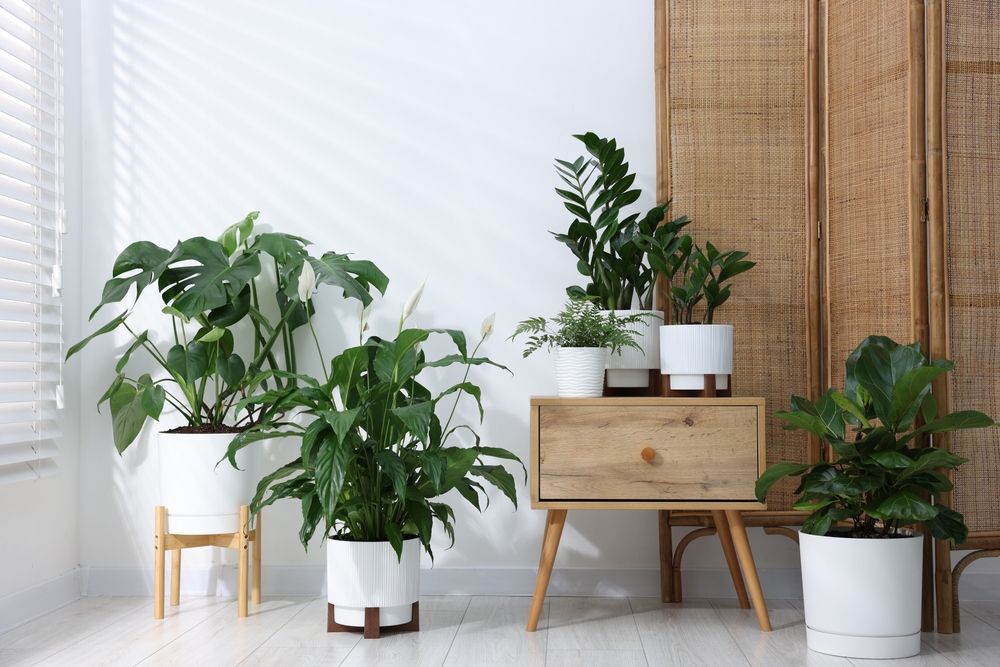
Tropical plants (monsteras, philodendrons, calatheas) are sensitive to cold draughts and dry air from heaters. Succulents and cacti love the cool, dry winter but hate sitting in wet soil. Ferns need humidity maintained – they will crisp up near a heater. Fiddle leaf figs hate being moved and hate cold windows. Leave them alone unless truly necessary.
With a few minor adjustments, your indoor plants should survive winter well in our region. If you’re not sure what your plant needs, one of our horticulturalists will be happy to help. We stock a beautiful range of plants that will thrive in your interiors – and some pretty pots too. Visit our garden centre to make your selection.