Winter is peak citrus season in our region. Healthy trees are laden with lemons, mandarins and oranges, and it’s tempting to just admire them and leave the rest until spring. But a bit of attention to your citrus over the next couple of months sets up a much healthier, more productive tree for the year ahead.
What to focus on now: feeding, pruning, and staying ahead of the two pests every Northern Rivers citrus grower comes up against sooner or later – citrus gall wasp and leaf miner.
Feeding: go easy, and time it right
Citrus needs plenty of feeding, but winter is not the time to push growth. In our mild climate, trees never fully stop growing, and heavy winter feeding, especially with high-nitrogen fertilisers, encourages exactly the kind of soft new growth that citrus gall wasp and leaf miner love to target. Save the big feed for late winter into spring, once the flush of new growth is about to happen anyway and the tree can use it productively.
While the fruit is still on the tree
Hold off on heavy nitrogen. A light dressing of a citrus-specific fertiliser. Citrus trees are prone to zinc, magnesium and iron deficiencies, so look for one that has trace elements. This will be enough to keep the tree ticking over.
Top up mulch. Keep a good layer out to the drip line to protect roots and suppress weeds through the cooler months – avoid getting it too close to the trunk.
Watch the leaves. Pale, yellowing leaves with green veins usually indicate a magnesium or iron deficiency rather than a nitrogen problem. A foliar trace-element spray can correct this faster than a soil-applied fertiliser. Visit our store to chat with our horticulturalists about caring for your citrus.
Save the main feed for late winter/early spring, once flowering and the spring flush are about to kick off. An organic compost is great for your citrus!
Pruning
Avoid hard, heavy pruning in the depths of winter if a cold snap is forecast. Freshly cut wood and any resulting new growth are more frost-tender. In most Northern Rivers locations, this is a minor risk compared to further south, but it’s still worth timing hard cuts for a settled stretch of weather.
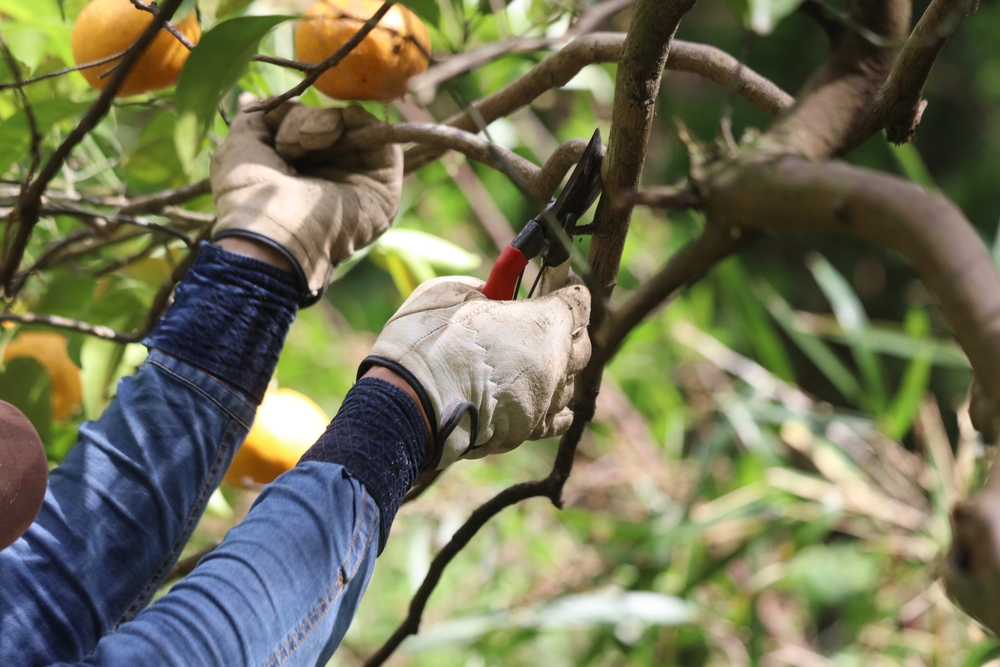
Citrus doesn’t need heavy annual pruning like deciduous fruit trees. Remove dead or damaged wood and any suckers coming from below the graft union. Open the centre of the tree slightly to improve airflow and light, reducing fungal issues and making fruit easier to pick. You can also harvest-prune as you pick by cutting fruit off with secateurs rather than pulling it to reduce stem damage and dieback.
The bigger structural pruning is the one that matters most for pest control, and it is best timed around gall wasp management.
Citrus gall wasp: this is where winter pruning really earns its keep
Citrus gall wasp is native to northern NSW and southern Queensland, so if you’re gardening in the Northern Rivers, it’s not a matter of if, but when. Most local citrus trees will pick up a few galls.
Adult wasps lay their eggs between the bark and wood of soft spring growth, and once the eggs hatch, the larvae burrow into the twig and feed there, causing the wood to swell into the characteristic lumpy galls. The larvae then spend most of the year developing inside that gall before emerging as adults the following spring to start the cycle again.
Why winter matters: the wasp only has one generation a year, and it spends most of its life cycle sealed inside the gall on your tree. That means winter, before the adults emerge, is your one real window to physically remove a huge portion of next season’s population before it ever gets airborne.
What to do: Inspect now. Walk around the tree and look for the swollen, woody lumps along young branches. Prune out every gall you can find, cutting well below the swelling into clean wood. Destroy what you cut by bagging and binning or burn it if you’re able to. Do not leave pruning on the ground or in an open compost heap, and don’t chip them into mulch used elsewhere in the garden. Larvae inside a gall left lying around will still complete their cycle and emerge. Please come into the garden centre to chat with our horticulturists for guidance.
Don’t over-fertilise afterwards. Because adult wasps target soft new spring growth to lay eggs in, they avoid a big flush of tender growth right before their emergence. This is the other reason to keep winter feeding light.
Because we’re in a warmer part of the wasp’s range, local emergence tends to run earlier than the timings often quoted for southern NSW and Victoria. In the Northern Rivers, it’s worth having your pruning and gall removal well and truly done by the end of winter rather than leaving it late. Once you see the small round emergence holes in old galls, the wasps have already left.
Citrus leaf miner: less destructive, but still worth managing
Leaf miner is the other pest that almost every citrus grower here deals with. The telltale signs are silvery, squiggly trails through new leaves, often with the leaves curling or twisting as a result. It’s caused by a tiny moth whose larvae tunnel through the leaf tissue.
Leaf miner mostly targets soft new growth, so a mature, well-established tree with a full canopy of hardened-off leaves can shrug off a fair amount of damage without any real impact on fruiting. Young trees and those with heavily flushing new growth are most vulnerable.
What to do over winter and into spring: Prune off badly mined new growth while you’re dealing with gall wasp. It won’t undo existing damage, but it removes larvae before they mature and reduces the local population. Avoid heavy nitrogen feeding, since it’s the flush of soft new leaves that attracts egg-laying moths in the first place. Consider applying a horticultural oil spray, such as white oil or eco-oil, to new growth in spring, when leaf miner activity picks up. It smothers eggs and larvae and disrupts the moth’s ability to lay on the leaf surface. It’s not usually necessary through the cooler winter months when growth has slowed.